A circle of dancers moving to the beat of drums. A neighbourhood transformed by spectacular art. A palace glowing against the evening sky. During Navratri and Dussehra, India’s traditions become experiences you can hear, see and share.
Navratri celebrates the divine feminine through nine nights of worship, while Dussehra, also called Vijayadashami, marks victory over evil on the tenth day. Together, these festivals offer international travellers an extraordinary introduction to India’s spiritual life and regional diversity.
Navratri in India: Meaning, Traditions and Cultural Experiences
Why is Navratri celebrated?
The word Navratri means “nine nights.” Devotees honour Goddess Durga and her nine forms, known as the Navadurga. In Hindu tradition, her battle against the demon Mahishasura represents the power of courage and righteousness to overcome destructive forces.
Prayers, fasting and community gatherings encourage reflection, gratitude and spiritual renewal. Customs differ between families and regions: some observe dietary restrictions, others organise devotional singing, and many honour young girls through Kanya Puja.
Although Navratri occurs at different times of the year, Sharad Navratri, usually in September or October, is the autumn celebration associated with Dussehra and the festivities described here.
How is Navratri celebrated across India?
Gujarat: Garba nights and Dandiya Raas
For travellers drawn to music and community celebrations, Gujarat offers a compelling Navratri experience. Ahmedabad and Vadodara are popular places to watch Garba, a circular devotional dance. Dandiya Raas adds the rhythmic striking of decorated sticks.
Colourful chaniya cholis, embroidered outfits and nightly aarti give these gatherings their distinctive character. Visitors can watch or join suitable public events, following the organisers’ guidance.
West Bengal: Durga Puja and spectacular artistry
Overlapping with the latter part of Navratri, Durga Puja has its own Bengali traditions. Kolkata’s temporary festival structures, called pandals, showcase elaborate designs and images of the goddess. Drumming, worship and neighbourhood gatherings bring the celebrations to life.
Durga Puja in Kolkata is recognised by UNESCO as Intangible Cultural Heritage, making it especially rewarding for visitors interested in living traditions and craftsmanship.
Southern India: Golu displays and devotional gatherings
In Tamil Nadu and other southern communities, Golu—or Kolu—displays arrange dolls and figurines on stepped platforms. Mythological scenes, music and household visits reveal a more intimate side of the festival. Access to private celebrations depends on an invitation.
Telangana: Bathukamma’s floral celebrations
During this festive season, Telangana celebrates Bathukamma. Women arrange seasonal flowers in colourful stacks, gather around them and sing traditional songs before ceremonial immersion. It offers a distinctive encounter with the region’s relationship between nature, devotion and community.
Why should international travellers experience Navratri?
Navratri brings visitors close to the people who sustain India’s traditions: dancers, artisans, musicians and neighbourhood communities. Beyond sightseeing, it offers opportunities to understand the meaning behind a prayer, learn a dance step and discover regional food.
Choose public celebrations, dress respectfully, ask before photographing worshippers and check entry arrangements. A local guide can help explain customs and identify welcoming venues.
Dussehra in India: Why It Is Celebrated and Where to Experience It
Why is Dussehra celebrated after Navratri?
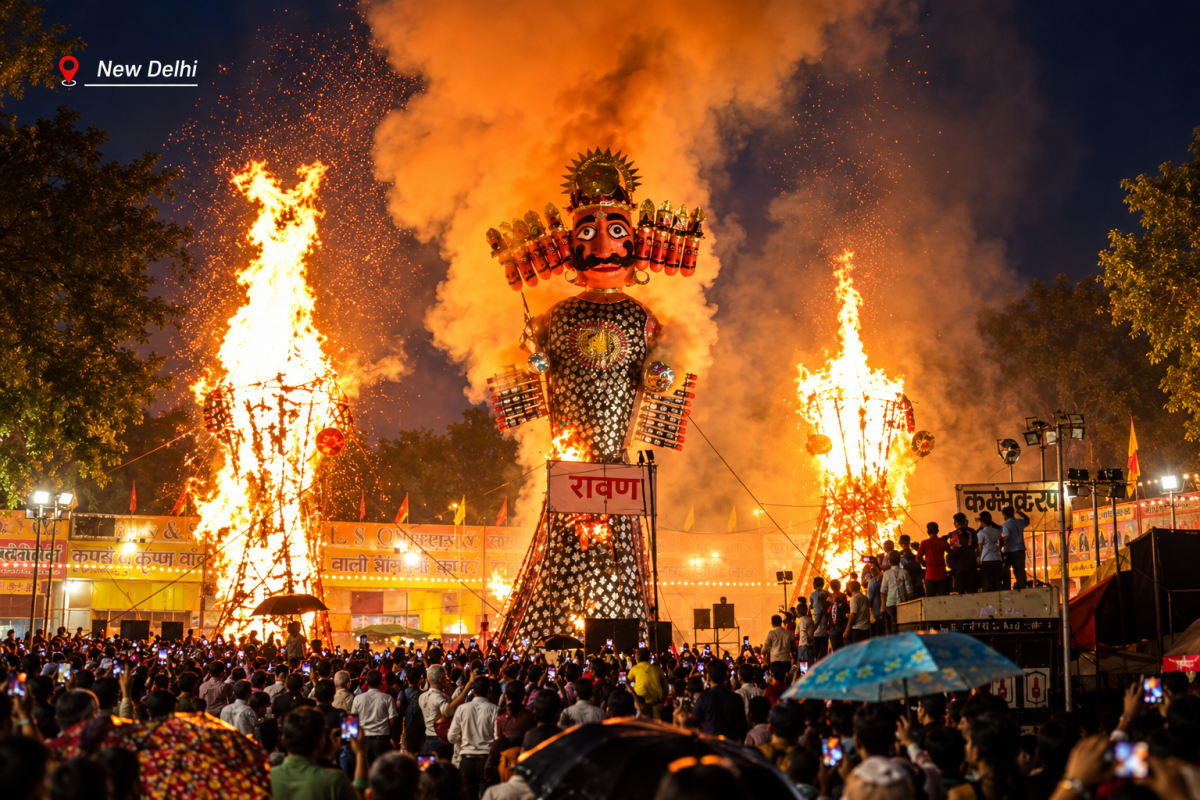
Dussehra celebrates Lord Rama’s victory over Ravana in the Ramayana. Vijayadashami also honours Goddess Durga’s victory over Mahishasura. These traditions share a message: righteousness, courage and wisdom can overcome evil.
Following the nine nights of Navratri, the tenth day becomes an occasion for celebration and new beginnings. However, India’s regional traditions vary considerably; burning Ravana’s effigy is only one expression of the festival.
How is Dussehra celebrated in different parts of India?
| Destination or region | Distinctive Dussehra celebrations |
|---|
| Delhi and many northern cities | Ramlila performances retell the Ramayana, culminating in Ravana Dahan—the burning of effigies of Ravana, often alongside Meghnad and Kumbhakarna. |
| Mysuru, Karnataka | Mysuru Dasara honours Goddess Chamundeshwari. Palace illumination, cultural programmes and the grand Jumboo Savari procession create a celebration shaped by royal heritage. |
| Kolkata and West Bengal | Bijoya Dashami concludes Durga Puja with farewell rituals and idol immersion. Sindoor Khela, traditionally involving married women, features at many celebrations. |
These destinations reveal three contrasting festival experiences: dramatic storytelling, royal pageantry and an emotional farewell to the goddess.
Kullu, Himachal Pradesh
Kullu Dussehra begins on Vijayadashami and continues for about a week. Village deities arrive in decorated palanquins to honour Lord Raghunath, accompanied by traditional music and community gatherings at Dhalpur Maidan.
Bastar, Chhattisgarh
Centred on Goddess Danteshwari and local deity traditions, Bastar Dussehra extends across approximately 75 days of rituals. Wooden chariots, community participation and Indigenous cultural traditions define it; Ravana effigy burning is absent.
Kota, Rajasthan
The Kota Dussehra Mela combines towering effigies and Ravana Dahan with a large festive fair. Its royal connections and regional traditions make it a distinctive addition to a Rajasthan cultural itinerary.
Maharashtra
Families exchange Apta leaves as symbolic gold, sharing wishes for prosperity. Worship associated with Shami trees also forms part of regional observances.
Kerala
Vijayadashami emphasises learning through Vidyarambham, when children are ceremonially introduced to letters. This quieter celebration expresses victory through knowledge and a hopeful beginning.
Planning a Navratri and Dussehra holiday in India
Choose Gujarat for dance, Kolkata for artistic celebrations, Mysuru for royal heritage or Kullu for Himalayan traditions. Festival dates follow the Hindu lunar calendar, and regional programmes can extend beyond Dussehra.
Book accommodation early, confirm event access and allow extra time for crowded streets. Contact IDMS Tours Pvt. Ltd. to discuss a cultural journey built around the celebrations you most want to experience.